
What counts as kitchen mold?
Kitchen mold is growth on the materials inside and around the cabinet base, usually on particleboard, plywood, the back of the cabinet, or the drywall behind it. It often starts from a slow leak that never produces a puddle, which is why it can grow for months before anyone notices.
Particleboard and MDF are common in modern cabinets, and both swell and soften when they stay wet. Once the core absorbs water, the material loses its strength and provides an easy surface for growth. Plywood holds up better, but its edges and back panels can still hold enough moisture to support mold when the leak is persistent.
Growth inside a cabinet is hard to see. Look for a sour or musty smell, a swollen floor panel near the sink, or a drawer that sticks. Those are often the first signs that something under the counter has been wet for a while.
How kitchen remediation works
The first step is a moisture survey of the cabinet base, the floor under it, and the wall behind the appliances. The technician removes the sink trap or drawer fronts where needed, then takes readings on the cabinet panels, the subfloor, and the drywall. The goal is to define the wet area by measurement, since cabinets can hide growth well beyond what is visible from the front.
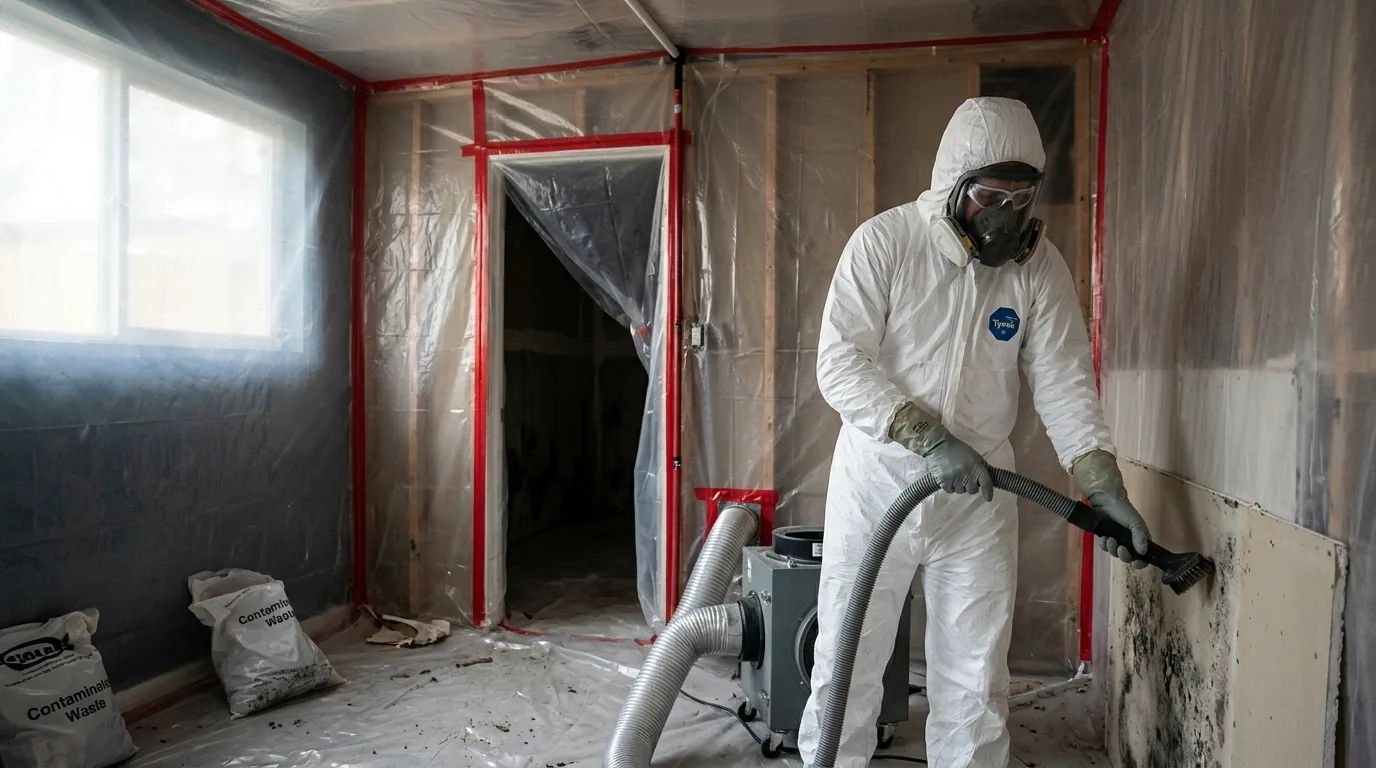
Containment in a kitchen is mostly about protecting food-contact areas and the rest of the home. Crews cover the countertop and nearby surfaces, seal the work zone with plastic, and keep food and dishes out of the area. HEPA filtration is used on any open cavity, and surfaces are wiped as work progresses so dust does not settle on the counters.
Removal focuses on swollen or moldy panels, damp insulation behind the wall, and any subfloor that has softened. Cabinet bases that are structurally sound may be cleaned, dried, and sealed. Panels that have lost strength or have growth deep in the core are usually replaced. Drywall behind the cabinet is cut back to dry material and rebuilt.
Most kitchen leaks come from the supply lines, the drain connection, or the dishwasher hose. Ask us to check each connection and to confirm the repair before the cabinet is reinstalled.
Drying and verification finish the job. Moisture readings confirm the subfloor and framing are dry before the new panels are fitted. Any sealant is applied after the surfaces are fully dry, and the sink and dishwasher are tested for leaks before the cabinet is closed.
Eight warning signs in the kitchen
Kitchen leaks are easy to miss because the cabinet doors stay closed. These signs suggest the space needs a closer look.
- A sour or musty smell when you open the cabinet under the sink.
- Swollen or bubbling panels at the base of the cabinet.
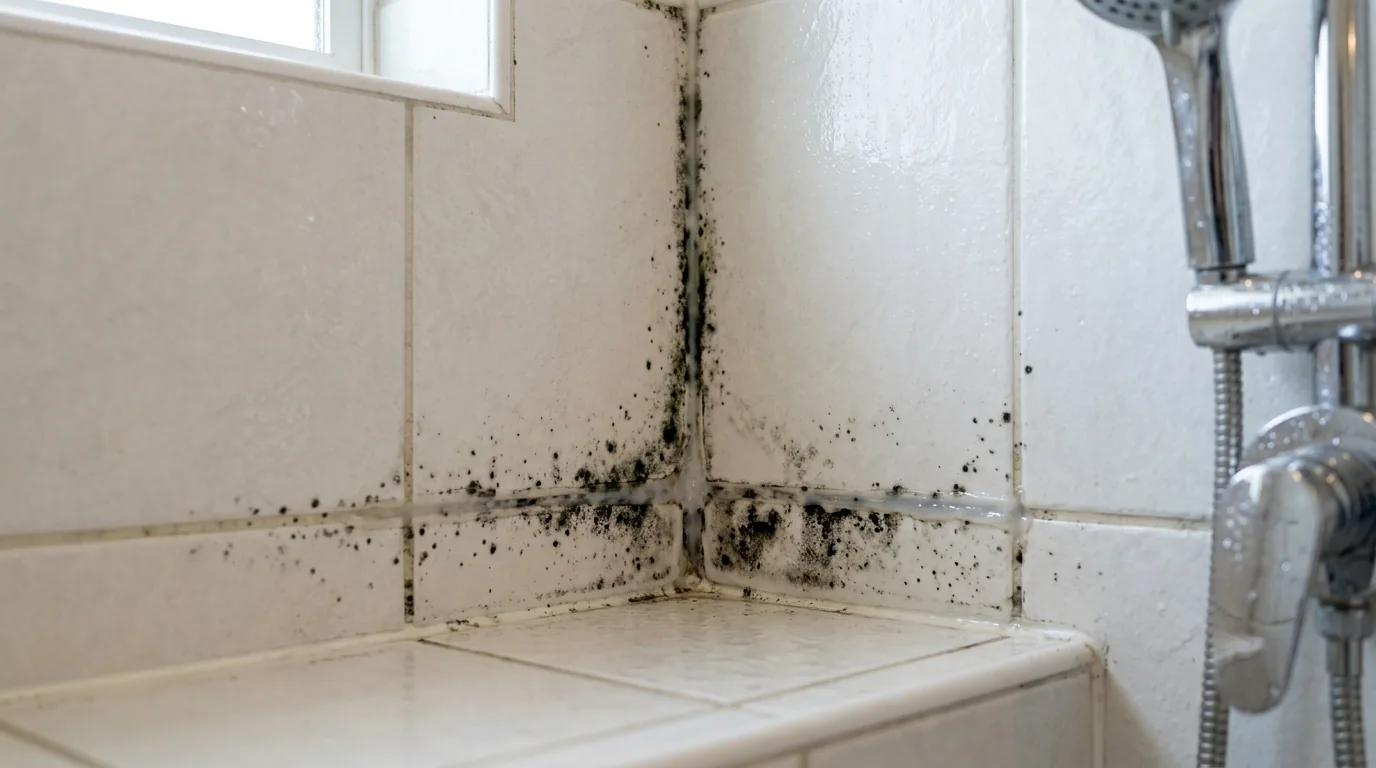
- White, green, or black spotting on the back of the cabinet or on the wall behind it.
- A soft or spongy floor in front of the sink or dishwasher.
- Drawers that stick or doors that no longer close flush.
- Staining on the toe-kick or the base of the cabinet.
- Mineral crust or white residue near a supply line or drain fitting.
- A water bill that rises without a clear reason.
A slow leak can keep a cabinet wet for months without any visible puddle. A rising water bill with no other explanation is worth checking, even if nothing looks wrong under the sink.
What causes kitchen mold to form
Under-sink leaks are the leading cause. A worn washer in a faucet, a loose compression nut, or a cracked drain tailpiece can drip for weeks. The water runs down the pipes and collects in the bottom of the cabinet, where it soaks the base and the back panel without leaving a visible pool.
Dishwashers are the second source. The drain hose, the door gasket, and the supply connection can all leak in small amounts. Because the appliance sits in a closed cavity, water builds up under the unit and against the subfloor. A dishwasher that drains slowly can add to the problem by holding standing water inside the tub.
Refrigerators with ice makers and water dispensers add a third source. The supply line behind the fridge can leak at the connection, and water can spread across the floor under the cabinets before anyone sees it. Many kitchens also have condensation on cold water lines that drips into the cabinet base.
Humidity from cooking is a smaller factor, but it matters. Steam from pots and dishwashers rises into the cabinets above the stove and can condense on the underside of upper shelves. Venting the range hood to the outside reduces that load, and running it during cooking helps keep surfaces dry.
Safe checks you can make first
Start under the sink. Turn off the supply valves, dry the cabinet, and place a clean towel on the floor. Turn the valves back on, run the faucet and the disposal, and check the connections after several minutes. A drip at a compression nut or a trap joint is often easy to fix, and the repair should be followed by a dry-towel check.
Next, look at the dishwasher and fridge. Check the hose clamps, the door gasket, and the supply line. Pull the dishwasher out only if you can do it safely and without disconnecting power improperly. For surface growth on a cabinet panel, EPA guidance indicates that areas of about 10 square feet or less can often be handled by a homeowner once the leak is stopped, with gloves and an N95 respirator.
Do not store food, cleaning supplies, or damp dishtowels in a cabinet with a suspected leak. Do not use an unfiltered fan to dry a moldy cabinet, and do not replace a swollen panel without checking the subfloor beneath it.
Keep a dated photo of the cabinet base before you clear it out. That record is useful for a technician and for an insurance claim if the damage turns out to be older than you thought.
The pro visit, step by step
- Intake. You describe the smell, the swelling, and any leaks you have noticed. The technician asks about the dishwasher, the fridge line, and the age of the cabinets and flooring.
- Survey. The technician opens the base, checks the panels, subfloor, and drywall, and takes moisture readings in the wet area.
- Written scope. You receive the list of panels and materials to replace, the containment plan, and the water-supply repair as separate items.
- Containment. The counter and nearby surfaces are covered, and the work zone is sealed with plastic.
- Removal and cleaning. Swollen panels and damp materials are removed and bagged. Sound framing is cleaned and dried.
- Leak repair. The supply line, drain, or dishwasher connection is corrected and tested under pressure.
- Rebuild and reinstall. New panels and drywall are installed, and the cabinet base is reattached and sealed.
Ask for the moisture readings and a note on the leak repair in writing. Keep them with your home records, especially if you sell the house later.
Cost factors for kitchen mold removal
We do not publish prices. Kitchen quotes depend on how much cabinetry is affected, what the subfloor looks like, and whether appliances must be moved.
| Factor | What it changes |
|---|---|
| Cabinet material | Particleboard usually needs replacement once swollen. Solid wood or plywood may be salvageable. |
| Countertop removal | Some repairs require the countertop to come off, which adds time and reinstallation work. |
| Subfloor condition | Soft subfloor must be cut out and replaced before new flooring goes down. |
| Appliance access | Dishwashers and refrigerators that must be moved add labor and reconnection time. |
| Supply line or drain repair | Plumbing work is separate from mold work and priced by the plumber. |
When a kitchen leak needs urgent action
Some kitchen conditions should be handled the same day.
- Water is actively flowing from a supply line, fitting, or appliance connection.
- Water is spreading across the floor into other rooms.
- A floor panel or subfloor feels soft, sags, or gives way under weight.
- An outlet, light, or appliance near the leak is wet or shows scorch marks.
- A household member with asthma or a breathing condition has symptoms that are getting worse.
Shut off the water valve under the sink or the main supply if you cannot reach the valve. If water is near electrical equipment, turn off power at the breaker. Call local emergency services if there is any risk of injury.
Kitchen mold questions
Can I just wipe the mold off the cabinet?
Wiping works only on sound, hard surfaces with light surface growth. Swollen particleboard or growth in the core cannot be cleaned to a safe standard, and the leak must be stopped first.
Is the dishwasher usually the cause?
It is one common source, along with the sink and the fridge line. Our team can test each connection to find which one is leaking.
Do I need to remove the countertop?
Not always. If the growth is limited to the base and the countertop can be safely lifted, it may stay in place. Some repairs require removal, and the technician should explain why.
Will the cabinets need full replacement?
Only the affected panels usually need replacement. Sound cabinets can often be cleaned, dried, and reused, depending on the material and the extent of the damage.
Can kitchen mold affect the rest of the home?
It can spread through shared subfloors and wall cavities into adjoining rooms. Check nearby walls and the floor beyond the cabinet when you find growth in the kitchen.
Should I keep cooking during the work?
Many households keep a small cooking area with a microwave or hot plate during the work, away from the sealed zone. Our team can advise on the best setup for your layout.