
What counts as bathroom mold?
Bathroom mold is growth on surfaces that stay wet after showers and baths. The usual places are grout lines, silicone caulk at the tub and shower edges, the paint on the ceiling above the shower, and the drywall or backer board behind tile.
Most surface growth in a bathroom is shallow and can be cleaned, but the material underneath matters. Grout is porous, and caulk can hide growth beneath its face where the bead has pulled away from the tub. When the wall behind the tile stays damp, the growth moves into the drywall or the wood framing and does not respond to surface cleaning.
Dark specks in a shower corner are common, but they can also point to a leaking valve, a failed tub seal, or a shower pan that moves water into the subfloor. A bathroom that smells damp after cleaning is usually telling you that moisture is getting somewhere it should not.
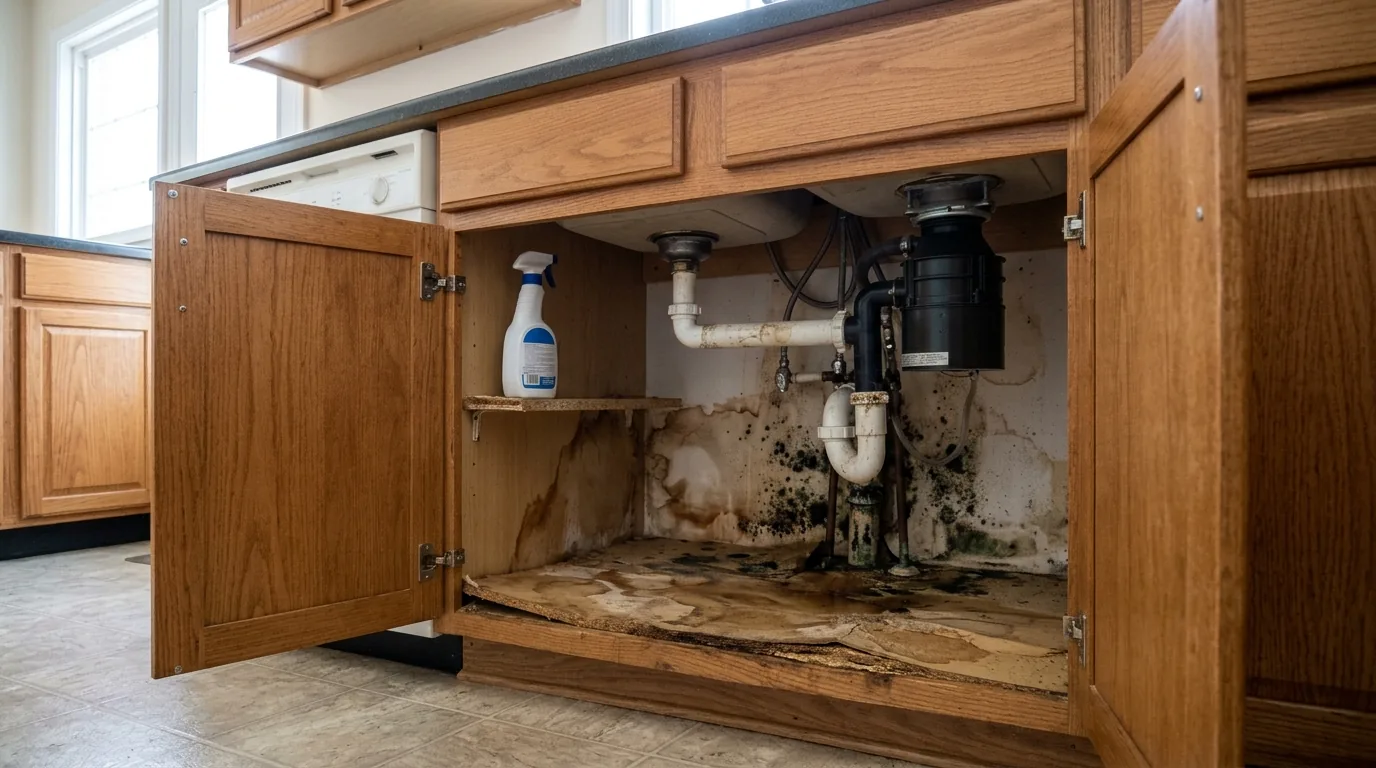
How bathroom remediation works
The first step is identifying which materials are affected. A technician checks the grout and caulk lines, the tub or shower surround, the ceiling, and the wall behind the fixtures. Moisture readings are taken on drywall and backer board. If tile is loose or hollow when tapped, that area is flagged because water may have passed behind it.
Containment is simpler than in a large basement or attic, but it still matters. The bathroom door is sealed with plastic, and the exhaust fan is kept off during demolition so spores are not pulled into the hallway. Crews use HEPA vacuums and damp wipes to control dust as they work.
Removal targets material that cannot be dried and cleaned. Drywall and paper-faced backer board that stayed wet are cut out. Caulk that is growing mold underneath is removed and replaced. Grout with surface growth is often cleaned and sealed, but grout with deep discoloration or crumbling joints may need regrouting. Tile itself is usually left in place unless it is loose or the substrate is replaced.
The exhaust fan is the most common reason bathroom mold returns. Ask whether the fan is sized for the room, whether it vents to the outside, and whether it runs long enough after a shower to clear the steam.
Drying and verification finish the job. Meters confirm framing and new drywall are at normal readings before the walls are closed up. Waterproofing is checked at the shower pan and tub surround, and new caulk is applied after the surfaces are fully dry.
Eight warning signs in a bathroom
Bathroom mold is easy to see, but the cause is often hidden. These signs suggest the room needs a closer look.
- Black or dark specks in grout that return soon after cleaning.
- Caulk that looks clean on top but lifts or stains when pressed.
- Peeling paint on the ceiling above the shower or tub.
- Soft drywall at the base of the tub surround or around the toilet.
- Loose or hollow-sounding tile on the shower wall.
- A damp smell that lingers for hours after showers.
- Fan that is loud, weak, or does not clear the mirror after a shower.
- Floor near the toilet or tub that feels spongy or shows discoloration.
A spongy floor near the toilet or tub deserves prompt attention. It can mean a leak at a seal or a failing subfloor, and water damage there can spread quickly into the rooms below.
What causes bathroom mold to grow
Steam is the main driver. A hot shower puts a large amount of water vapor into a small room, and that vapor condenses on the coolest surfaces: the ceiling, the upper wall, and the window. If the room does not dry quickly, the moisture stays long enough for growth to start.
Exhaust fans are the second factor. A fan that is undersized, clogged with dust, or not run long enough leaves humid air behind. Fans that vent into the attic or soffit rather than outside move the problem rather than solving it. Many older bathrooms have fans that were installed without a timer or humidity control, which is one reason moisture lingers.
Leaks are the third cause, and they often go unnoticed. A failed shower valve, a cracked tub seal, or a worn toilet wax ring can keep a small area wet for months. The growth then shows up on the wall or floor far from the actual leak, which makes the source hard to trace without a moisture reading.
Surface finish matters too. Painted drywall without a moisture-resistant primer and grout that has never been sealed give growth more to work with. Caulk that has aged and cracked lets water into the joint behind the tub, where it stays out of sight.
Safe checks you can make first
Start by running the exhaust fan during and after a shower, and leave it on for a period afterward. Check that the fan's vent duct leads outside, and clean the fan cover and grille. Keep the shower curtain inside the tub so water does not hit the floor, and wipe the shower walls after use to reduce standing water.
For surface growth on grout and caulk, EPA guidance indicates that areas of about 10 square feet or less can often be handled by a homeowner once moisture is corrected. Wear gloves, goggles, and an N95 respirator, and open a window if possible. Use a cleaner made for mold on hard surfaces, and do not mix cleaners, especially bleach with ammonia-based products, because the combination releases harmful gas.
Do not scrub soft drywall or the wall behind tile to test it, do not caulk over active growth, and do not ignore a spongy floor. Each of these can hide or worsen the damage.
If you see growth behind the tile or on the ceiling above the shower, stop there and call a professional. Those areas involve materials and water paths that are hard to judge from the surface.
The pro visit, step by step
- Intake. You describe where the growth is, whether the floor or ceiling feels soft, and how often the fan runs. The technician asks about leaks, past repairs, and the age of the fixtures.
- Inspection. The technician checks grout, caulk, tile, the tub surround, the ceiling, and the floor near the toilet, and takes moisture readings on the wall and subfloor.
- Written scope. You receive the list of affected materials, the containment plan, and the fan and leak repairs as separate items.
- Containment and removal. The door is sealed, the fan is controlled, and wet drywall or backer board is cut out and bagged.
- Cleaning and drying. Framing and remaining surfaces are cleaned, then dried to normal readings.
- Leak and fan repair. Seals, valves, and the exhaust duct are corrected, and the fan is tested.
- Rebuild and finish. Drywall, backer board, grout, and caulk are replaced, and the surfaces are sealed.
Ask for the moisture readings and a note on the fan's venting path in writing. Those records make it easier to confirm the fix later.
Cost factors for bathroom mold removal
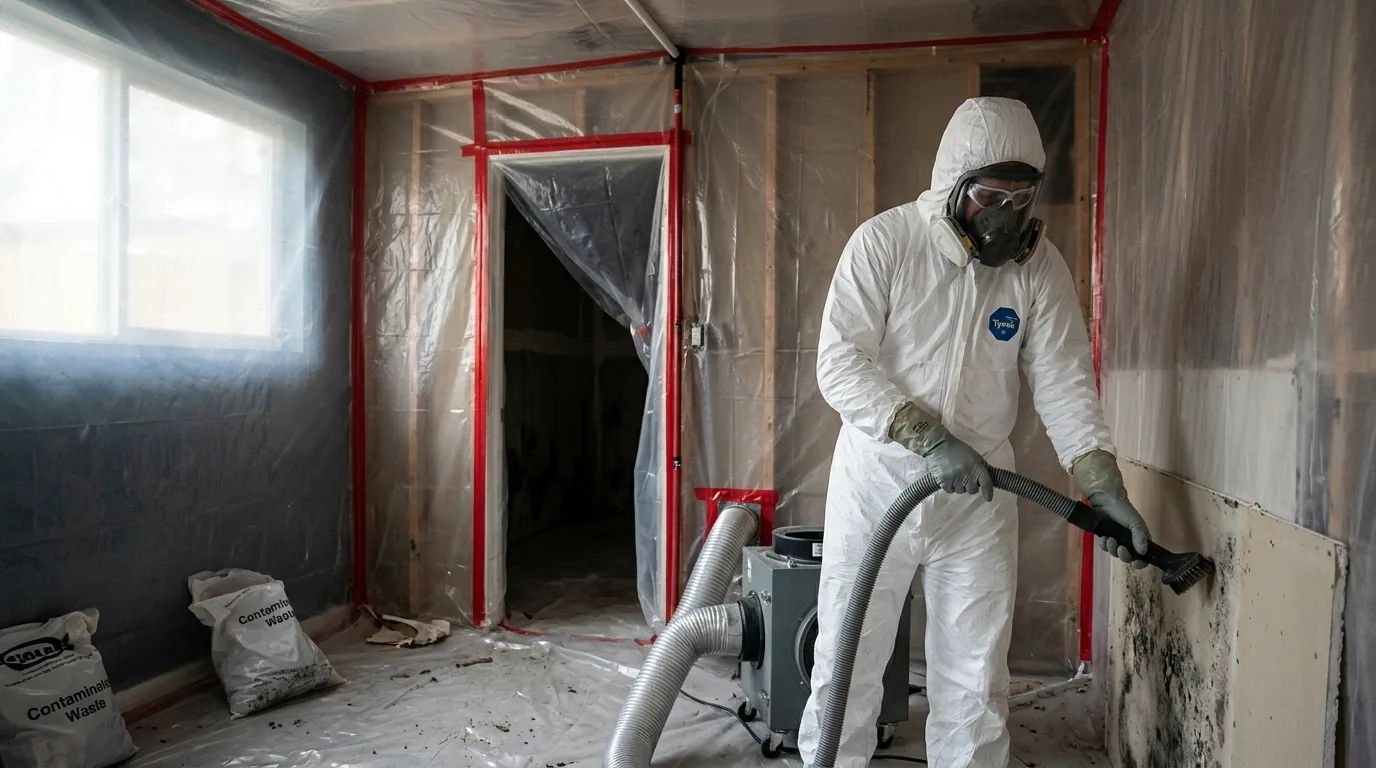
We do not publish prices. Bathroom quotes depend on what is behind the tile, whether the tub or shower needs to come out, and what the fan and leak repairs involve.
| Factor | What it changes |
|---|---|
| Tile and surround | Removing tile to reach the wall adds demolition and reinstallation work. |
| Tub or shower pan | Replacing a pan or tub is a separate trade and can be the largest line item. |
| Exhaust fan | A fan replacement or duct reroute adds electrical and venting work. |
| Subfloor condition | Soft subfloor needs cutting out and replacing before finishing. |
| Plumbing repair | A valve or drain repair is separate from mold removal. |
When bathroom mold needs urgent attention
Some bathroom conditions call for prompt action.
- Water is pooling under the toilet, tub, or shower, or is reaching the room below.
- The floor is soft or sinks when you step near a fixture.
- Ceiling drywall above the shower is sagging or dripping.
- There are electrical fixtures or outlets near wet walls, or you see scorch marks.
- A resident with asthma or a breathing condition is having symptoms that are getting worse.
Shut off the water supply to the fixture if you can find the valve, and turn off power at the breaker for the bathroom if water is near electrical equipment. Call local emergency services if there is any safety risk.
Bathroom mold questions
Will a stronger bleach solution remove bathroom mold for good?
Stronger cleaners do not solve a moisture problem. Growth behind caulk or drywall will return unless the water path is corrected and the material is replaced.
Should I replace the grout or seal it?
If the grout is intact and the growth is on the surface, cleaning and sealing may be enough. Crumbling or deeply discolored grout usually needs replacement.
Is caulk the cause of the mold?
Caulk itself is rarely the root cause. It often traps moisture when it has pulled away from the tub, which lets water reach the wall behind it.
How often should the exhaust fan run?
Run it during the shower and for a while after, until the mirror clears and the air feels dry. A fan with a timer or humidity control can help make this automatic.
Can a bathroom mold problem affect the rest of the house?
Yes. Humid air from a bathroom can reach attic and ceiling spaces, and leaks can move water into the floor below. Check adjoining rooms when you find growth in a bathroom.
Do I need to leave the house during the work?
For a single bathroom with the door sealed, many people stay home and avoid that room. If the job involves the floor or the shower pan, the technician may recommend limiting use of the other bathrooms during work.